
AR 600-9 Explained: The Army Body Composition Program (2026)
Cover image: U.S. Army reference illustration.
AR 600-9 is the Army regulation that governs the Army Body Composition Program (ABCP): the policy that sets body-composition standards for every Soldier and spells out what happens if a Soldier doesn't meet them. As of July 7, 2026, the standard it enforces is waist-to-height ratio (WHtR): a result below 0.550 meets the standard, with no age or gender adjustment.
What Changed in July 2026
Effective July 7, 2026, Army Directive 2026-13 rewrote the standard AR 600-9 enforces. Waist-to-height ratio became, in the directive's own words, "the sole measurement for all Soldiers," and the height and weight screening tables were discontinued. Here's what that means in practice:
- The standard is a single number. A WHtR of less than 0.55 meets the standard; 0.55 or higher does not.
- You're measured at least twice a year. Every Soldier gets a WHtR assessment a minimum of twice per calendar year.
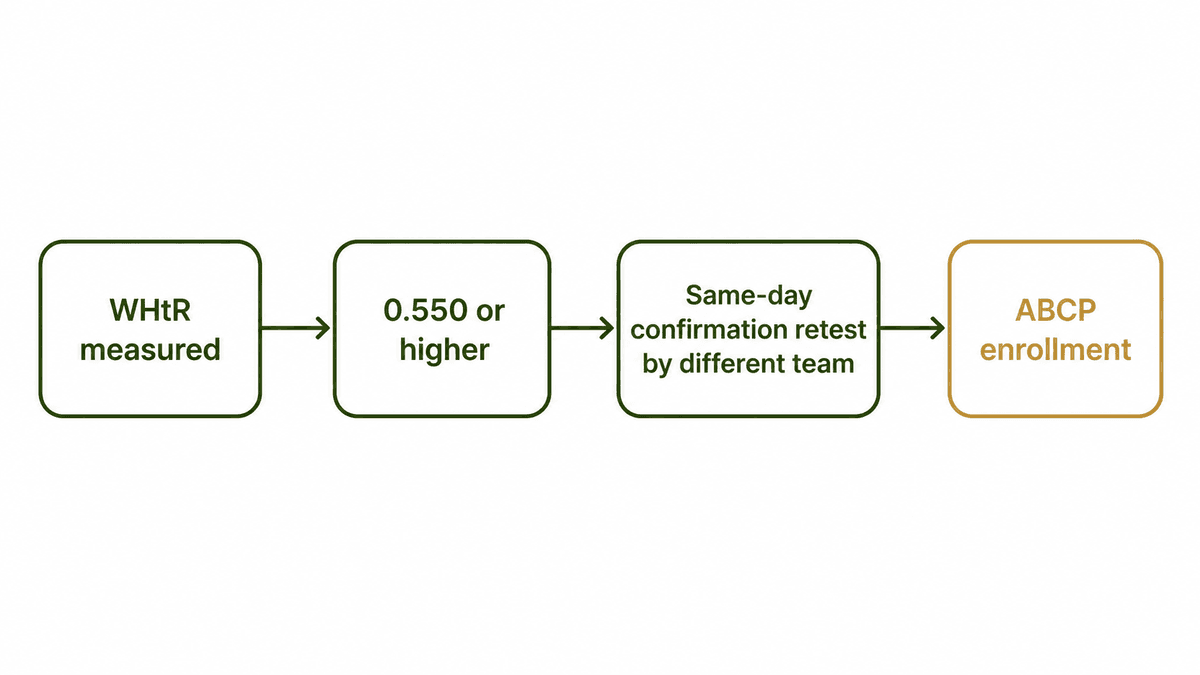
- A failing result gets a same-day retest. If your initial measurement doesn't meet the standard, a different team re-measures you on the same duty day, before your commander takes any action.
- A confirmed 0.55+ means enrollment. Two measurements at or above 0.55 (initial and confirmation) mean you're flagged and enrolled in the ABCP.
- It reaches further than before. The directive extended the standard to U.S. Military Academy cadets and Senior ROTC cadets, on top of the Regular Army, Army National Guard, and Army Reserve, and it applies to all retention actions and military schools.
- A high AFT score no longer exempts you. The directive rescinded AD 2025-17, so no Army Fitness Test score creates an exemption from the WHtR standard.
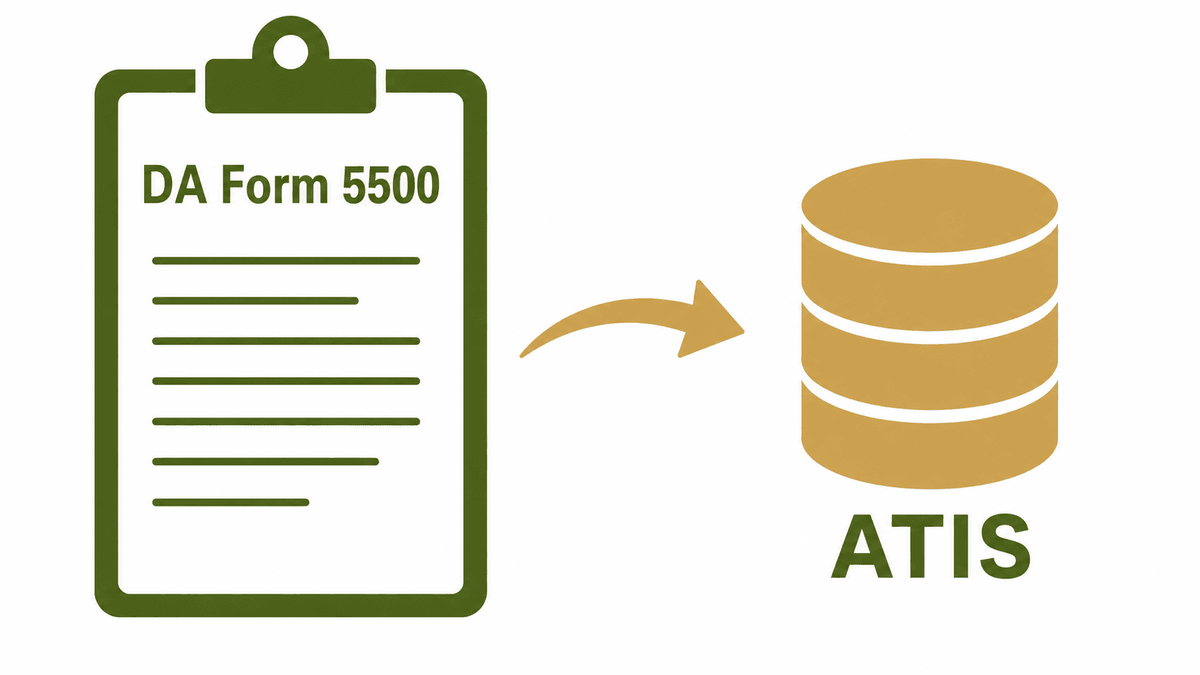
- Recording has a deadline. Every Soldier's initial WHtR must be recorded on DA Form 5500 and in the Army Training Information System (ATIS) within 90 days of the directive, by approximately October 5, 2026.
- No one is separated over this alone, yet. The Army is running a 180-day review of the WHtR standard. Units can start separation paperwork for an ABCP failure, but no Soldier is separated until that review finishes and further guidance is issued.
Check where you stand with the Army WHtR Calculator. Source: Army Directive 2026-13 (Army Publishing Directorate)
The Current Standard
WHtR is calculated the same way for every Soldier:
Waist circumference (measured at the navel) ÷ height, both in inches.
- Passing threshold: below 0.550.
- Rounding: the result is truncated to three decimal places, not rounded: a calculated 0.5499 is recorded as 0.549 (passing); a calculated 0.5509 is recorded as 0.550 (failing).
- No adjustments: there's no age-based or gender-based version of the threshold. Every Soldier is measured against the same 0.550 line.
Run your own numbers with the Army WHtR Calculator, or see more worked examples in our FAQ. Source: ABCP FAQ (army.mil)
What AR 600-9 Covers
AR 600-9, officially "The Army Body Composition Program," is the Army regulation that implements Department of Defense Instruction (DoDI) 1308.3, the DoD-level policy on military body composition and fitness standards.
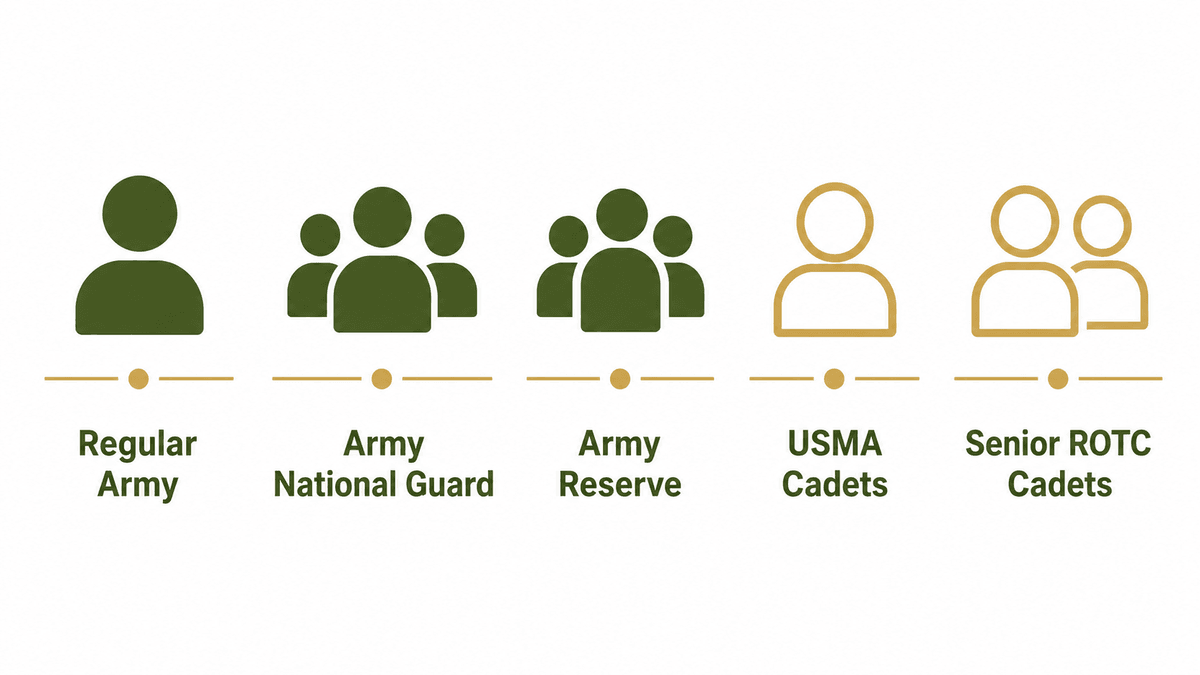
Who it applies to: the Regular Army, the Army National Guard/Army National Guard of the United States (ARNG/ARNGUS), and the U.S. Army Reserve (USAR), and, since Directive 2026-13, U.S. Military Academy cadets and Senior ROTC cadets. It also reaches all retention actions and military schools and institutional training courses.
What it requires: periodic body-composition screening, a defined process for enrolling a Soldier who doesn't meet the standard, counseling and monitoring while enrolled, a path to a medical evaluation, and defined criteria for release from the program. Directive 2026-13 changed the measurement those requirements are built around: it didn't remove the requirements themselves. Source: AR 600-9 (Army Publishing Directorate)
Key Sections of the Regulation
AR 600-9's printed text (last formally revised 16 July 2019, administratively updated 27 February 2025) is organized into three chapters and four appendices. Here's what each one covers, in plain English:
Chapter 1: Introduction. States the regulation's purpose: implementing the Army Body Composition Program. For a Soldier: this is the chapter that makes AR 600-9 binding policy, not just guidance.
Chapter 2: Responsibilities. Assigns duties across the chain of command: from the Deputy Chief of Staff, G-1 (the regulation's proponent) down through the Surgeon General, Army commands, school commandants, medical treatment facilities, and individual commanders and supervisors. For a Soldier: this is who actually runs your measurements, counseling, and monitoring.
Chapter 3: Army Body Composition Program. The core chapter: overview, standard, exemptions, weigh-in and assessment, enrollment, actions and counseling (handled separately for active-duty Soldiers and Reserve Component Soldiers not on active duty), administrative requirements, monitoring progress, medical evaluation, program failure, release from the program, reassessment within 36 months of release, pregnancy, hospitalization, and reenlistment criteria. For a Soldier: this is the chapter that governs what happens if you don't meet the standard: enrollment, counseling, a medical-evaluation option, and release. Note: the printed text of paragraphs 3-2 (Standard) and 3-3 (Exemptions) still describes the pre-2026 body-fat-percentage and height/weight-table standard: Directive 2026-13 overrides that language until the Deputy Chief of Staff, G-1 formally rewrites the regulation, which it has up to two years from the directive's date to do.
Appendix A: References.
Appendix B: Standard Methods for Determining Body Fat. The tape-measurement and height/weight-table methodology, plus the old DA Form 5500/5501 completion instructions. This is the appendix Directive 2026-13 superseded: its methods are no longer the authorized standard.
Appendix C: Weight Loss. General weight-management guidance for enrolled Soldiers.
Appendix D: Internal Control Evaluation. An administrative checklist for commanders and auditors, not Soldier-facing.
Source: AR 600-9, full text (PDF), Army Publishing Directorate
What Was Rescinded
Directive 2026-13 rescinded:
- The height and weight screening tables (Appendix B).
- The tape-test method and every other supplemental body-fat assessment previously authorized to challenge a WHtR result.
- DA Form 5501, the previous female-specific worksheet.
- The AFT/ACFT score exemption from body composition standards (AD 2025-17).
- The requirement for commanders to designate an NCO to administer the ABCP: commanders are now directly responsible for oversight.
- Monthly progression assessments for Soldiers enrolled in the program.
None of these apply to a Soldier's WHtR result today, regardless of when they were measured under the old system. The retired tape-test method and screening tables are preserved, clearly labeled as historical, on our archived height and weight calculator, for anyone researching how the prior standard worked.
What's Still in Use
- DA Form 5500: now used for every Soldier, regardless of gender.
- ATIS: the Army Training Information System, where WHtR results are recorded using the Leader Tool.
- Twice-yearly screening: every Soldier still gets measured at least twice per calendar year.
- Same-duty-day confirmation retest: the safeguard against enrolling someone based on one bad measurement.
- Flag code K: non-transferable noncompliance flagging under AR 600-8-2 still applies to ABCP enrollment.
- The medical-evaluation path: Regular Army and Active Guard Reserve Soldiers get a commander-requested exam after enrollment; National Guard and Reserve Soldiers not on active duty can request one at their own expense.
Source: Army Directive 2026-13 (Army Publishing Directorate)
Where to Read the Regulation Yourself
Don't take a summary's word for it. The source documents are public:
- AR 600-9, full text (PDF), Army Publishing Directorate
- AR 600-9, official record, Army Publishing Directorate
- Army Directive 2026-13, full text (PDF), Army Publishing Directorate
- Army modifies body composition program, adopts waist-to-height ratio (Army.mil)
- Army Body Composition Program FAQ, Army.mil
FAQ
What does AR 600-9 stand for? It's Army Regulation 600-9, officially titled "The Army Body Composition Program." The number identifies the regulation; the title describes what it covers.
Is AR 600-9 still in effect? Yes. Army Directive 2026-13 changed the standard inside AR 600-9: it didn't cancel the regulation. The Army Body Composition Program still operates under AR 600-9, now using waist-to-height ratio.
Does AR 600-9 apply to the National Guard and Reserve? Yes. The regulation applies to the Regular Army, Army National Guard, and Army Reserve, with no separate standard for any component.
Does AR 600-9 apply to ROTC and USMA cadets? Yes. Army Directive 2026-13 extended the WHtR standard to U.S. Military Academy cadets and Senior ROTC cadets, effective July 7, 2026.
What form is used for AR 600-9 measurements now? DA Form 5500, for every Soldier. DA Form 5501, the previous female-specific version, is discontinued since the current standard doesn't adjust by gender.
Can I be separated immediately for failing WHtR? No. Enrollment in ABCP isn't separation: it's a remediation process. The Army is conducting a 180-day review of the WHtR standard, and no Soldier will be separated for a WHtR failure until that review is complete and further guidance is issued.
Sources
- AR 600-9, full text (PDF), Army Publishing Directorate
- AR 600-9, official record, Army Publishing Directorate
- Army Directive 2026-13, full text (PDF), Army Publishing Directorate
- Army modifies body composition program, adopts waist-to-height ratio (Army.mil)
- Army Body Composition Program FAQ, Army.mil
If you're navigating a body composition concern, Military OneSource offers free, confidential fitness and nutrition coaching for service members and families, 24/7, or call 800-342-9647.
Recommended Regulations Reads
Quick internal links to the most relevant pages for AR 600-9, tape test rules, and ACFT exemptions.
- Open Army Height and Weight CalculatorCheck screening weight and estimate body fat percentage (AR 600-9).
- Old Height and Weight Calculator (Archive)Rescinded July 2026, kept for historical reference only.
- Browse All Blog ArticlesGuides on AR 600-9, tape test rules, and ACFT exemptions.
- Army body fat standards by age and gender
- One-site tape test (AR 600-9) explained
Related Regulations Articles
AR 600-9 Tape Test Rounding Rules: How to Measure Correctly
Learn how AR 600-9 tape test measurements are taken, how rounding works in real units, and how to avoid common mistakes before height and weight.
The AR 600-9 One-Site Tape Test (Rescinded July 2026)
The one-site tape test was rescinded July 7, 2026 and replaced by waist-to-height ratio. This guide explains how the old method worked and what replaced it.
Check Your Standards Now
Use the Army Height and Weight Calculator (AR 600-9) to check screening weight and estimate body fat percentage.