
Best Tape Measure for Waist Measurement (Army WHtR Standard)
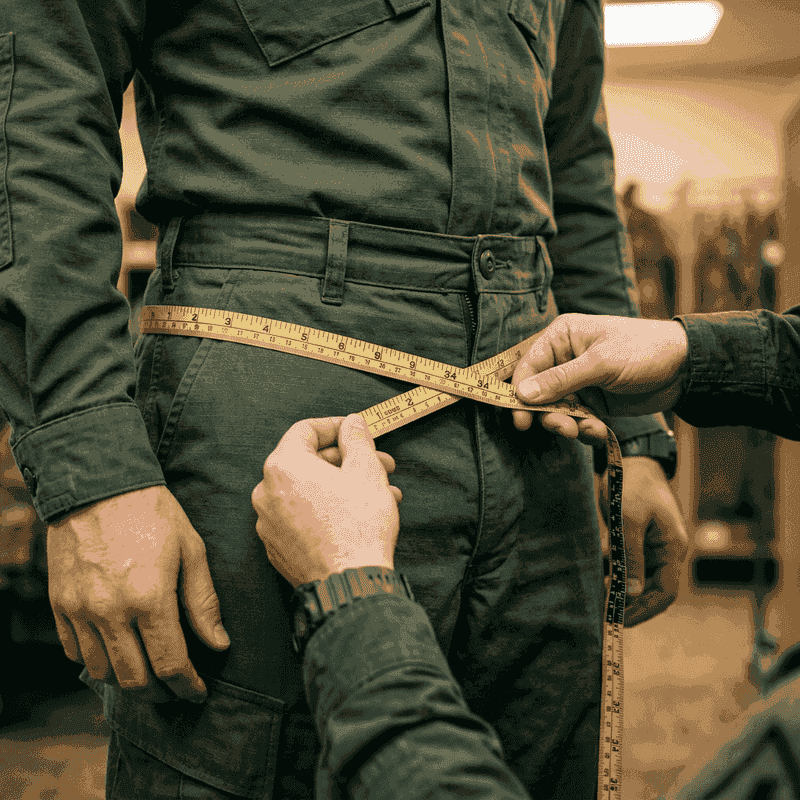
A non-stretch tape with fine markings matters more under WHtR than it used to.
As an Amazon Associate I earn from qualifying purchases. This post contains affiliate links; we may earn a small commission from qualifying purchases at no extra cost to you. Every recommendation here is selected solely for measurement accuracy.
Choosing the best tape measure for waist measurement matters more than it used to. Under Army Directive 2026-13, your entire body composition standard comes down to one ratio: waist circumference divided by height, truncated to three decimals, compared against 0.550. There's no age table, no gender adjustment, and no fitness-test exemption to soften a bad measurement. That makes the tape measure you use, not just your actual waist size, something worth getting right.
Why Tape Choice Matters at the WHtR Boundary
Here's the math, worked out exactly. A Soldier who is 70 inches tall (5'10") with a true waist of 38.9 inches has a ratio of 38.9 ÷ 70 = 0.5557, truncated to 0.555, a fail. If the tape used has a half inch of stretch or slack and reads 38.4 inches instead, that's 38.4 ÷ 70 = 0.5486, truncated to 0.548, a pass. Nothing about that Soldier's body changed. The tape did.
That half-inch swing isn't a worst-case scenario. Cheap fabric and vinyl tapes commonly stretch that much within a year of regular use, and the effect compounds with wear. Since WHtR truncates rather than rounds, and there's no buffer built into the 0.550 threshold the way the old system had one, a tool-driven error this small is enough to change which side of the standard you land on.
It also cuts the other way, and this matters just as much. Take a shorter Soldier, 64 inches tall (5'4"), with a true waist of 34.9 inches: a ratio of 34.9 ÷ 64 = 0.5453, truncated to 0.545, a pass with a small margin. A tape pulled too tight, or angled instead of level, that reads a half inch long at 35.4 inches gives 35.4 ÷ 64 = 0.5531, truncated to 0.553, a fail. The Soldier in this example didn't gain anything. A measurement error manufactured a result that then has to be walked back at a confirmation retest, which is an avoidable hassle for everyone involved, not just an inconvenience for the Soldier being measured.
This is also why the official process includes a same-duty-day confirmation measurement by a different team whenever an initial reading is at or above 0.550. That step exists precisely because measurement error is real and the Army knows it. It's not a reason to be careless with your own self-checks between official assessments; it's a reason to remove as much of that error as you can control, which starts with the tape itself.
What to Actually Look For
- Non-stretch material. Fiberglass, or cloth with a fiberglass core, holds its length under tension instead of gradually elongating.
- Fine markings, ideally tenths of an inch. Coarse whole-inch or wide-fraction marks force you to estimate between lines. Finer graduations mean you're reading a number, not guessing at one.
- At least 60 inches of length, so you have overlap to read the number for any waist size without running out of tape.
- A lock or hold function, so the reading doesn't loosen the moment you let go to look at it.
Comparing Tape Types, Honestly
Cloth sewing tape. What most people already own. Fine for a one-time rough check, but cloth and cloth-wrapped elastic stretch measurably with use, and the markings are often coarse. Not what you want for tracking a number that matters.
Retractable vinyl body tape. The push-button, one-handed style tapes sold for fitness tracking. Convenient, and the vinyl itself doesn't stretch the way cloth does, but the plastic housing and marking quality vary a lot between brands. Check that the markings are genuinely fine and legible before relying on one.
Fiberglass body tape. Non-stretch, flexible enough to wrap cleanly around the waist, and generally the best balance of accuracy and price for regular self-tracking. This is the category we recommend by default.
Spring-tension (Gulick-style) tape. Used clinically for anthropometric measurement, with a built-in tension handle that keeps the pull consistent regardless of who's measuring. The most precise option because it removes the "how snug is snug" variable entirely, at a higher price point than a basic fiberglass tape.
Our Pick
Non-Stretch Body Tape Measure (Tenths-of-an-Inch Markings). Cheap fabric tapes stretch with use. At the 0.550 boundary, half an inch changes your result. It's the same tape we point to on our recommended gear page, chosen for the same reason: non-stretch material and markings fine enough that you're not interpolating between lines.
What to Expect to Pay
Accuracy here doesn't require a big purchase. A quality fiberglass body tape typically runs somewhere between five and fifteen dollars, and the retractable vinyl style is often similar. Spring-tension clinical tapes cost more, generally in the twenty-to-forty-dollar range, because you're paying for the tensioning mechanism, not fancier materials. Past that basic quality tier, more money doesn't buy more accuracy. It buys convenience: a locking mechanism, a nicer case, a more comfortable grip. The tape's material and marking quality do the actual accuracy work, and those don't scale with price the way people assume.
How Often to Replace a Tape
Fiberglass tapes hold their accuracy for years under normal use, but "non-stretch" isn't the same as "indestructible." A tape that's been kinked, left in a hot vehicle repeatedly, or used for a year of daily measurements is worth rechecking even if it looks fine. There's no fixed replacement schedule; the check below tells you what you actually need to know, which is more useful than a guess at a calendar interval.
A Quick Check for the Tape You Already Own
Before buying anything, check what's in your drawer. Lay your current tape flat against a rigid ruler or yardstick and compare the two at several points along the length, not just at the end. If your tape reads noticeably short or long against a rigid reference, or if the markings have become hard to read, that's your answer. A tape that passes this check is fine to keep using; one that doesn't is worth replacing before your next self-check.
FAQ
Does a more expensive tape measure give a more accurate WHtR? Not by itself. Past a basic quality tier, non-stretch material and fine, legible markings do the accuracy work, not price. A cheap fiberglass tape measured correctly beats an expensive one measured over bulky clothing.
How often should I replace my tape measure? There's no fixed schedule. Check it periodically against a rigid ruler or yardstick at several points along its length; if it reads noticeably short or long, or the markings are hard to read, replace it.
Does the tape need to be in inches, or is metric fine? You need inches. WHtR under AR 600-9 is calculated in inches, so a metric-only tape forces you to convert every reading. Many body tapes mark both inches and centimeters on opposite edges, which works fine.
Can I use the same tape for self-checks and expect it to match my official measurement? It'll get you close, but your unit's official measurement, taken by a trained team using the prescribed method, is always what counts. A consistent self-check tells you your trend, not your record.
Once you have a tape you trust, run your number through the Army WHtR Calculator to see exactly where you stand. For the measuring technique itself, alone or with help, see how to measure your waist accurately, and see our full recommended gear guide for what we deliberately don't recommend.
Recommended Tools Reads
Quick internal links to the most relevant pages for AR 600-9, tape test rules, and ACFT exemptions.
- Open Army Height and Weight CalculatorCheck screening weight and estimate body fat percentage (AR 600-9).
- Old Height and Weight Calculator (Archive)Rescinded July 2026, kept for historical reference only.
- Browse All Blog ArticlesGuides on AR 600-9, tape test rules, and ACFT exemptions.
- Calculator guide (AR 600-9)
- FAQ: AR 600-9 and tape test questions
Related Tools Articles
AR 600-9 Tape Test Rounding Rules: How to Measure Correctly
Learn how AR 600-9 tape test measurements are taken, how rounding works in real units, and how to avoid common mistakes before height and weight.
The AR 600-9 One-Site Tape Test (Rescinded July 2026)
The one-site tape test was rescinded July 7, 2026 and replaced by waist-to-height ratio. This guide explains how the old method worked and what replaced it.
Check Your Standards Now
Use the Army Height and Weight Calculator (AR 600-9) to check screening weight and estimate body fat percentage.