How to Pass the Army Tape Test in 2026 — Step-by-Step Guide
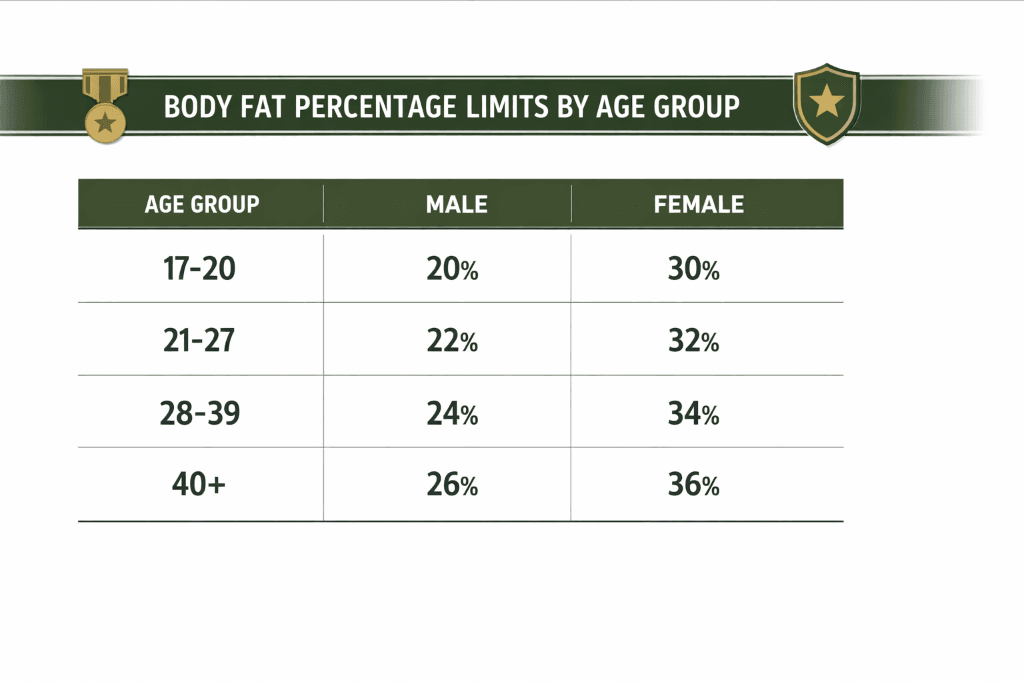
Official Army body fat percentage limits by age group.
Listen up, Soldier. If there is one thing that strikes fear into the hearts of recruits and seasoned NCOs alike, it is not the ACFT leg tuck or the two-mile run. It is the tape test. Most soldiers fear the tape test more than the scale itself. You can be fit, strong, and perform like a beast on the field, but if you carry a little extra around the middle, a bad day with the tape can land you straight into the Army Body Composition Program (ABCP).
But here is the good news: the Army updated its body fat assessment standard. The 2023 update simplified the process down to ONE site (waist only), and this rule continues to govern all screenings in 2026. This matters because it removes the old formulas that favored specific neck sizes and instead places the focus entirely on a single, standardized waist measurement.
Before we dive into the details, you need to know where you stand. If you want to check your numbers right now, use our new army tape test calculator 2026. It only takes a few seconds to see if you are good to go.
Use our free Army tape test calculator →
What Changed in the 2023/2026 Tape Test Update
Let’s talk history for a second. Under the old AR 600-9 method, the Army used a multi-site formula. For males, that meant measuring the neck and the waist. For females, it was the neck, waist, and hips. It was a complex, three-measurement process that left a lot of room for error, tension inconsistencies, and frustration.
The new method simplifies the tape test down to waist ONLY at the navel. That is one measurement, one site, for everyone.
The Army made this change for a few simple reasons:
- Simplicity: It is much faster and easier for testers to administer consistently.
- Consistency: Reducing the number of measurements reduces the human error that happens when wrapping tapes around multiple body parts.
- Accuracy: Modern health data shows abdominal circumference is the single best indicator of body composition and health risks.
This update affects all soldiers across the board—whether you are Active Duty, Army Reserve, National Guard, or a brand new recruit at MEPS. No one is exempt from the standards, so you must learn how the single-site rules apply to you.
Check your body fat percentage →
Step-by-Step: How the Tape Test is Done
If you exceed your screening weight, the NCO in charge will order you to the tape station. Here is exactly how the process goes down, step-by-step. Pay attention, because knowing the exact protocol will keep you from getting blindsided.
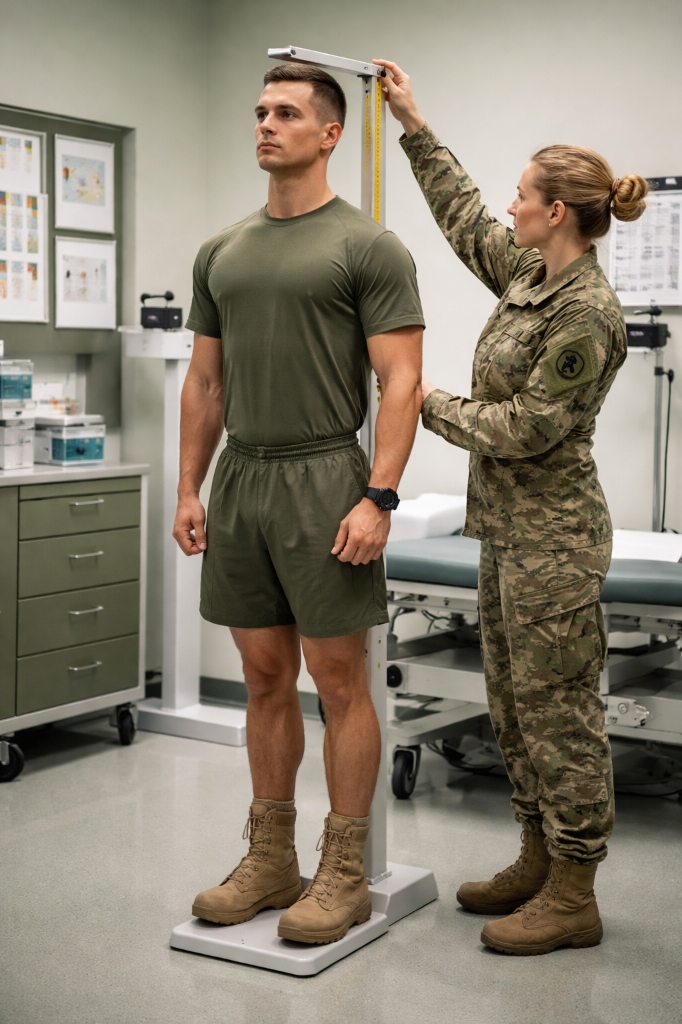
Step 1: Height Measurement
First, you will step up to the stadiometer. You must take off your shoes and stand tall, heels together, with your back and buttocks touching the measuring board. The NCO will measure your height to the nearest 0.5 inch.
Step 2: Weight Check
Next, you will step on the scale. You must be in your standard physical training (PT) uniform (shorts and T-shirt) with no shoes.
Here is the golden rule: If you are under the maximum weight for your height on the screening table, you PASS. You do not need to be taped, and you can go back to your unit. If you exceed the maximum weight, the tape test is officially required to determine your body fat percentage.
Step 3: Waist Measurement (The Only Measurement Now)
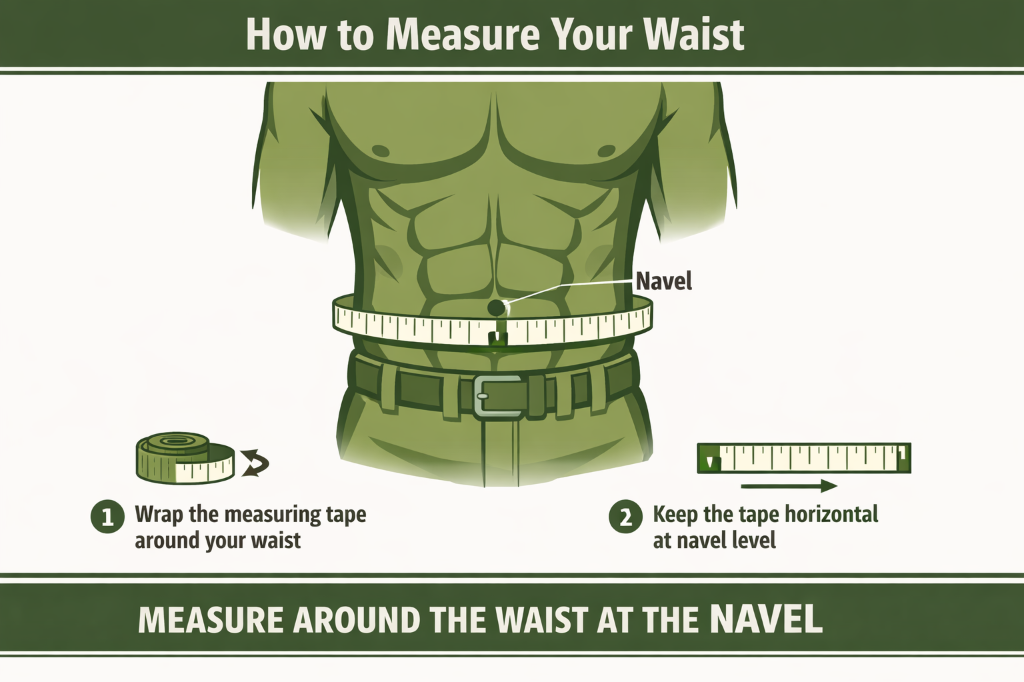
If you are over the screening weight, the tape comes out. The tester will wrap the tape around your abdomen at the level of the navel (belly button).
Here are the strict requirements:
- The tape must be placed at the navel level.
- The tape must be completely horizontal all the way around your body (not angled or sloping).
- The tester will take two measurements and average them.
- The measurement is recorded to the nearest 0.5 inch.
Step 4: Body Fat Calculation
Once the tester has your height and your averaged waist measurement, they will use the official mathematical formula to estimate your body fat.
For males, the formula is:
- Male Formula: 86.010 × log10(waist) − 70.041 × log10(height) + 36.76
Once the percentage is calculated, it is compared against the maximum body fat limit allowed for your specific age group.
7 Common Mistakes Soldiers Make at the Tape Test
Many soldiers fail the tape test not because they are out of shape, but because they make stupid, preventable mistakes. Avoid these seven pitfalls:
- Breathing in deeply (sucking it in): Trying to suck in your stomach during the measurement will cause the tester to pull the tape tighter or order a re-test. The regulation states you must be measured at a normal, relaxed state after exhaling.
- Wearing thick waistbands or pockets full of gear: Make sure your PT shorts are pulled down or up so they do not sit directly under the tape. Thick waistbands inflate your waist size.
- Not knowing your exact height: If you slouch during the height check, you lose height, which mathematically increases your body fat percentage in the formula.
- Eating a massive meal before weigh-in: Bloating and a full stomach can easily add 0.5 to 1.0 inch to your waist. Keep your meals light and low-sodium before the test.
- Letting the tape slide or angle: If the NCO is lazy and lets the tape sag in the back, the angled loop will read a larger circumference. Keep an eye on the mirror and politely request that the tape be kept horizontal.
- Not knowing the updated rules apply to you: Some units or MEPS testers still try to use the old multi-site tape method. Know your rights under the current AR 600-9.
- Waiting until weigh-in day to check: Do not guess. Track your measurements weeks in advance so you can make adjustments.
Body Fat Limits by Age Group — 2026
Your allowable body fat limit depends on your age. The older you get, the more leeway the Army grants you. Here are the official limits:
| Age Group | Male Limit | Female Limit |
|---|---|---|
| 17-20 | 20% | 30% |
| 21-27 | 22% | 32% |
| 28-39 | 24% | 34% |
| 40+ | 26% | 36% |
5 Tips to Reduce Waist Size Before Weigh-In
If your tape test is coming up in a few days and you are right on the edge of passing, use these safe, short-term NCO tips to bring your waist size down:
- Reduce sodium 3 days prior: High sodium intake makes your body hold onto water weight, bloating your midsection. Flush your system by drinking plenty of water and cutting out processed foods.
- Cut carbs 48 hours before: Carbs store as glycogen in your muscles and liver, and each gram of glycogen holds about 3 grams of water. Reducing carb intake temporarily sheds water weight.
- No alcohol for 1 week: Alcohol causes inflammation, dehydration, and bloating. Cut it out completely leading up to the test.
- Get measured in the morning: Your body is naturally leaner and less bloated first thing in the morning before you have consumed liquids and food.
- Incorporate consistent cardio 4-6 weeks before: There is no magic pill. If you want to lose real fat around your waist, you need consistent calorie-burning cardio (like running or rucking) coupled with a clean diet.
ACFT Score Exemption — Can You Skip the Tape Test?
The Army rewards high performers. If you are a physical powerhouse, you can bypass the tape test entirely.
If you score 465 or higher on the record ACFT (with a minimum of 80 points in each event on standard events), you qualify for an exemption from the ABCP tape test under the updated standards. Previously, this threshold was 540+. However, you must still pass the initial height/weight screening table; if you exceed the screening weight but have a qualifying ACFT score, you pass automatically without needing to be taped.
Use calculator to check your status →
FAQ Section
Q: Does the 2026 tape test still measure hips and neck? A: No. Under the official single-site policy, only the waist at the navel is measured. (Note: Female soldiers who fail the one-site waist tape test are allowed a secondary screening using the classic multi-site method before being enrolled in ABCP).
Q: How many times is the waist measured? A: The tester will measure your waist twice. If the measurements differ by more than one inch, they will take a third measurement. The final score is the mathematical average of the measurements.
Q: Can I retake the tape test if I fail? A: You can request a re-test, but it is typically at the discretion of your commander. It is best to pass on the first try.
Q: What happens if I fail both the weight check and the tape test? A: You will be flagged and enrolled in the Army Body Composition Program (ABCP). You will have to show monthly progress (losing 3-8 pounds or 1% body fat per month) to get unflagged.
Q: Is there a minimum weight in the Army? A: Yes, if you are severely underweight, you will be referred for a medical evaluation to ensure you are fit for duty.
Conclusion
The Army tape test does not have to be a source of stress. With the single-site waist measurement standard, passing is simpler than ever—provided you keep your waist circumference under control and avoid silly mistakes on weigh-in day.
Be proactive. Grab a tape, check your measurements, and use our tools to verify your status before the NCO calls your name.

Recommended Tape Test Reads
Quick internal links to the most relevant pages for AR 600-9, tape test rules, and ACFT exemptions.
- Open Army Height and Weight CalculatorCheck screening weight and estimate body fat percentage (AR 600-9).
- ABCP CalculatorComplete Army Body Composition Program calculator under AR 600-9 standards.
- Browse All Blog ArticlesGuides on AR 600-9, tape test rules, and ACFT exemptions.
- One-site tape test explained
- Calculate body fat step-by-step
Related Tape Test Articles
AR 600-9 Tape Test Rounding Rules: How to Measure Correctly
Learn how AR 600-9 tape test measurements are taken, how rounding works in real units, and how to avoid common mistakes before height and weight.
The New Army One-Site Tape Test Guide
The Army recently updated its body fat assessment method. Learn how the one-site tape test works and how it affects you.
Check Your Standards Now
Use the Army Height and Weight Calculator (AR 600-9) to check screening weight and estimate body fat percentage.