7 Tips to Prepare for Your Next Height and Weight Screening

For many Soldiers, the semi-annual height and weight screening is a source of more anxiety than the Army Combat Fitness Test (ACFT) itself. Under the strict guidelines of AR 600-9 (The Army Body Composition Program), failing to meet weight and body fat standards can have immediate and severe consequences for your military career. However, passing "tape" shouldn't be a matter of luck or dangerous last-minute hacks.
Success is built on a foundation of consistent self-monitoring and professional preparation. By understanding how the Army height and weight calculator works and applying these seven researched tips, you can show up to your next unit weigh-in with confidence.
1. Implement Consistent Self-Monitoring
The biggest mistake Soldiers make is waiting until they see their name on a "training schedule" to check their weight. Stress levels spike when you realize you are five pounds over the limit with only three days to go.
Use the Tools Available
You should be using an Online Army Height and Weight Calculator at least once a month. This "Early Warning System" allows you to catch upward trends before they become regulatory problems. If you find your weight creeping up, you can make minor caloric adjustments over four weeks rather than resorting to dangerous "crash diets" in the final 72 hours.
2. Master the One-Site Tape Technique
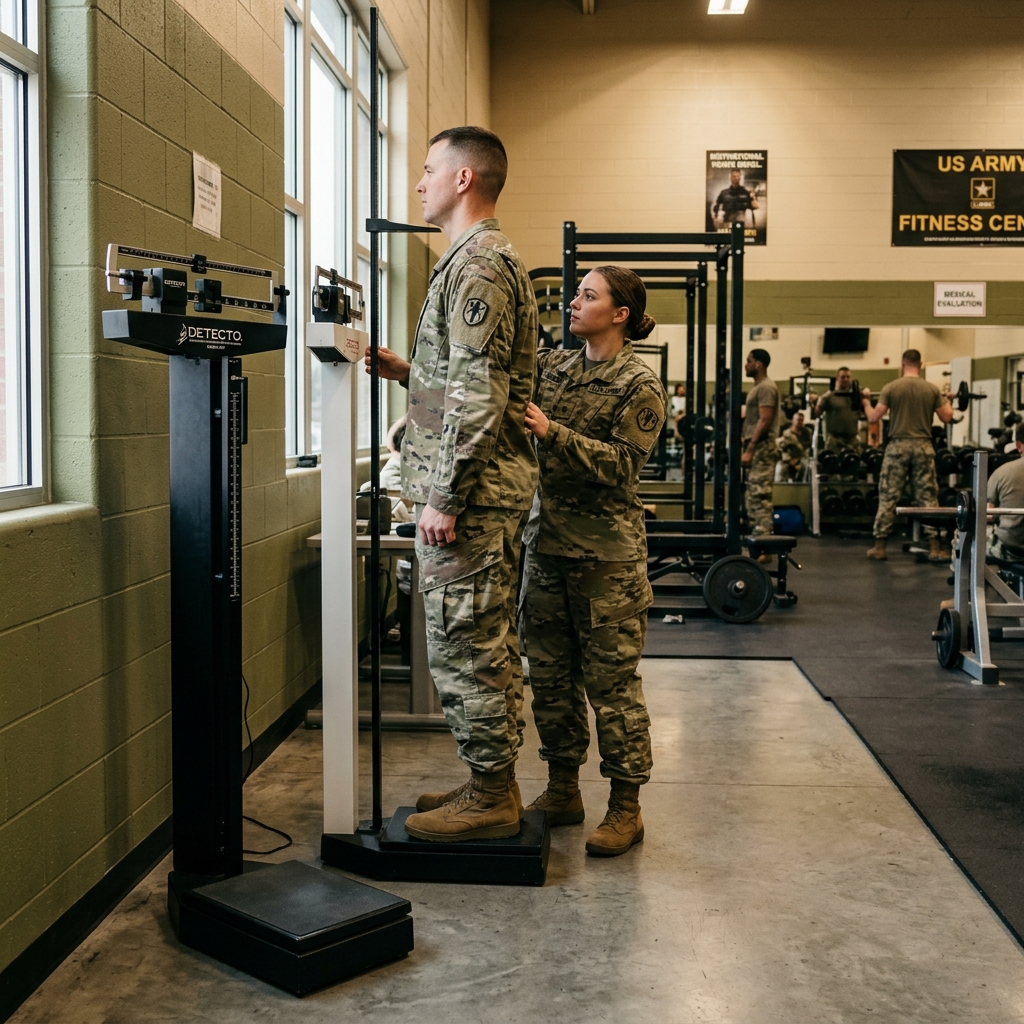
In June 2023, the Army transitioned to a New One-Site Tape Test that measures the abdominal circumference at the level of the navel (belly button). Understanding the mechanics of this measurement is vital.
Posture and Breath
While you are strictly forbidden from "sucking it in" (NCOs are trained to spot this), your posture significantly impacts the reading. Standing tall with your shoulders back and feet hip-width apart ensures the tape lies horizontally. If you slouch, your abdominal wall may protrude further, adding a critical half-inch to your score. Practice standing in a "relaxed but tall" military posture to ensure the most accurate measurement.
3. Prioritize the ACFT 465 Exemption
The most effective way to "pass" height and weight is to be so fit that the standards no longer apply to you. Under current Army policy, any Soldier who scores a 465 or higher on the record ACFT (with a minimum of 80 points in every event on standard events) is exempt from the body fat tape assessment.
Shift Your Focus
If you find yourself constantly struggling with the scale, consider shifting your training focus toward the ACFT. Investing your energy into a 465+ score not only makes you a more capable Soldier but also permanently removes the "tape anxiety" from your life. You can read more about this in our ACFT Exemption Guide.
4. Strategic 48-Hour Nutrition
The 48 hours leading up to a weigh-in are not about fat loss"they are about inflammation and water management. You cannot lose significant body fat in two days, but you can reduce your abdominal circumference by managing what you eat.
Cut the Sodium
High sodium (salt) intake is the leading cause of water retention in the abdominal area. For the two days preceding your screening, avoid processed foods, MREs, and soy sauce. Focus on "whole foods" like grilled chicken and plain vegetables. This can often lead to a "flush" of retained water, potentially reducing your waist measurement by 0.5 to 1 full inch.
5. Avoid Dangerous "Quick Fixes"
Every motor pool has a story about a Soldier who passed tape by using a sauna suit or taking laxatives. These methods are extremely dangerous and often counterproductive.
The Risks of Dehydration
Severe dehydration doesn't just make you lightheaded; it actually makes your muscles appear smaller and less dense, which can negatively impact the weight-to-waist ratio used in some Army body fat percentage calculators. More importantly, it puts you at a high risk for heat injury and electrolyte imbalances. Focus on being "hydrated but lean" rather than "dehydrated and weak."
6. Utilize Supplemental Assessments
If you are a Soldier with significant muscle mass and the tape test incorrectly identifies you as "over," remember that you have rights under the new AR 600-9 guidance.
Know Your Rights
If you fail the one-site tape test, you can request a Supplemental Body Fat Assessment. This includes high-tech options like the DEXA scan or the Bod Pod. These tools are far more accurate at distinguishing between "heavy muscle" and "excess fat." If you know you are fit but the tape says otherwise, don't panic"request the supplemental test through your chain of command.
7. Professionalism at the Scale
How you conduct yourself during the weigh-in matters. Show up in the correct IPFU uniform, ensure you are in stocking feet (no shoes), and follow the NCOIC's instructions to the letter.
Maintain Military Bearing
Being argumentative or trying to "game" the tape measure usually results in a more scrutinized measurement. By being professional and prepared, you ensure a fair and clinical assessment. Remember, the NCO is simply following the AR 600-9 table; your job is to provide the best data point possible.
Summary: Long-Term Readiness
Passing height and weight shouldn't be a biannual miracle. It should be a byproduct of a lifestyle focused on Nutritional Fitness and constant readiness. By using Army Calculator Height and Weight tools regularly and following a disciplined training plan, you can focus on your mission rather than the measurement.
External Research Sources:

Recommended Preparation Reads
Quick internal links to the most relevant pages for AR 600-9, tape test rules, and ACFT exemptions.
- Open Army Height and Weight CalculatorCheck screening weight and estimate body fat percentage (AR 600-9).
- ABCP CalculatorComplete Army Body Composition Program calculator under AR 600-9 standards.
- Browse All Blog ArticlesGuides on AR 600-9, tape test rules, and ACFT exemptions.
- Tape test step-by-step calculation guide
Related Preparation Articles
AR 600-9 Tape Test Rounding Rules: How to Measure Correctly
Learn how AR 600-9 tape test measurements are taken, how rounding works in real units, and how to avoid common mistakes before height and weight.
The New Army One-Site Tape Test Guide
The Army recently updated its body fat assessment method. Learn how the one-site tape test works and how it affects you.
Check Your Standards Now
Use the Army Height and Weight Calculator (AR 600-9) to check screening weight and estimate body fat percentage.